
Home › Blog › What to check before buying land in Colombia: zoning, land use and title
What to check before buying land in Colombia: zoning, land use and title
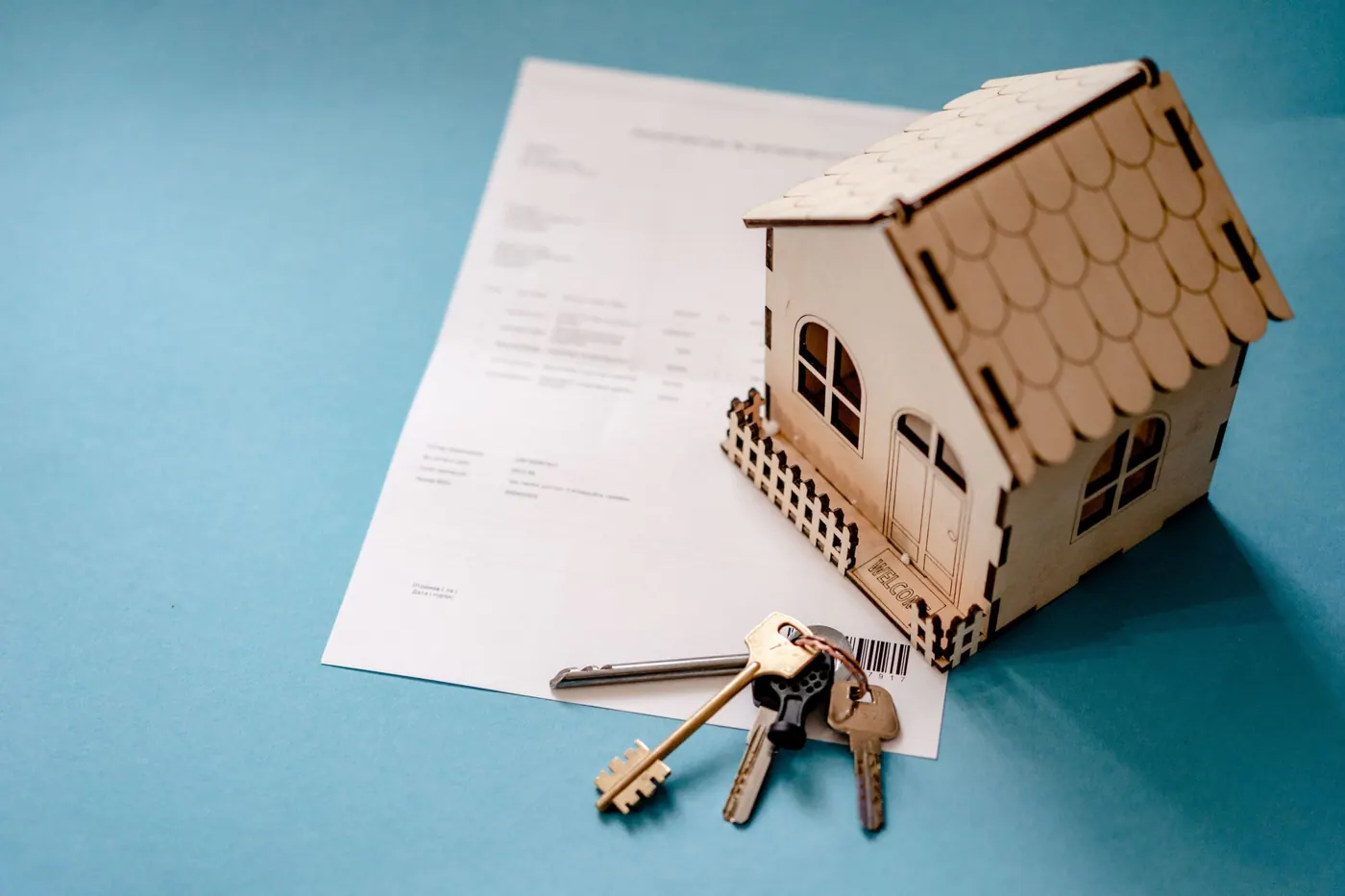
House model, keys and a purchase contract (illustrative photo: Atlantic Ambience, Pexels)
A lot is bought for what can be done with it. Two lots of the same size in the same area can be worth very different amounts if the regulations allow more construction on one than on the other, or if one has a stream, a planned road or a lien. This checklist helps you review the essentials before signing a promise of sale.
1. Legal status: certificate of title and title study
The first filter is legal. The certificate of title (certificado de tradición y libertad), issued by the Superintendence of Notaries and Registry, shows the registered owner and any mortgages, liens, lawsuits or restrictions on the property (GOV.CO). It can be downloaded online with the registry office and the property registration number (SNR).
With that certificate and the deeds, a lawyer carries out the title study: confirming that the seller is entitled to sell, that the chain of ownership is complete and that there are no problematic estates or sales.
Warning signs
- The seller does not appear as the owner on the certificate.
- There are uncancelled liens, lawsuits or mortgages.
- What is being sold is "rights" or a share of a property with several owners, not a lot with its own registration number.
- The deed area does not match the actual measurement.
2. Zoning: the POT and land use
Each municipality's land-use and zoning plan (POT) states whether a lot is urban, expansion, suburban or rural land, which uses are allowed and how much can be built. Two documents are useful:
- Land-use concept (concepto de uso del suelo): states whether an activity can be located on the property under the POT. Note: under Decree 1077 of 2015 (article 2.2.6.1.3.1), this concept does not grant rights or impose obligations (Medellín City Hall).
- Zoning lookup or zoning sheet: shows the treatment, building allowances (floor area ratio, height, density), setbacks and restrictions.
In Medellín, the POT lookup in Mapas Medellín lets you search the property by address, registration number or CBML code, but the City Hall itself warns that it is for guidance only and not valid for official procedures: for permits, the regulations are checked with the curadurías (official manual). We explain this in detail in how to find out the building potential of a lot in Medellín.
3. Permits: what you need to build or subdivide
Buying a lot does not give you permission to build. Depending on what you want to do, you will need a development permit (licencia urbanística):
- Building: to erect, extend or modify buildings.
- Urban development (urbanización): to prepare a lot on urban or expansion land (roads, utility networks, land dedications).
- Rural subdivision (parcelación): to create roads and public and private spaces on rural or suburban land, so that the resulting lots are used as the POT and environmental rules allow (Ministry of Housing).
- Lot split (subdivisión): to divide the property.
Permits are issued by the urban curador where there is a curaduría; where there is none, by the competent municipal authority (Ministry of Housing). If the seller says the lot "has a permit" or that the permit is "in process", ask for the filing number or the resolution and verify its status and validity with the issuing office.
4. Physical condition of the land
The regulations say what is allowed; the land tells you what is feasible and at what cost. Check:
- Topography: steep slopes make building more expensive and may end up as protected areas.
- Water and setbacks: streams and springs require strips that cannot be built on.
- Hazards and risks: the POT identifies areas at risk of landslides or flooding.
- Utilities: availability of water, sewer and electricity, or the option to provide them yourself with the required permits.
- Access: the lot should front a road or have a registered right of way.
5. The price: compare it with what can be built
The value of a lot does not depend only on its square meters but on its potential: how many square meters can be built, for what use and at what development cost. So, before negotiating, it pays to compare a commercial appraisal with the regulations. That is what we do in our appraisal and property potential service.
Common mistakes when buying a lot
- Buying "rights" in a lot without its own registration number, assuming it can be divided later. Division depends on the regulations and a permit, not on an agreement between neighbors.
- Trusting what the seller says "can be built" without a zoning lookup for the property.
- Not checking stream setbacks or slopes, which can greatly reduce the usable area.
- Not verifying access: a lot without road frontage or a registered right of way can end up landlocked.
- Paying in full before the deed without guarantees in the promise of sale.
Checklist before you sign
- A recent certificate of title, reviewed by you.
- A title study by a lawyer.
- A land-use concept and zoning lookup for the property.
- Verification of existing permits (number and validity) with the issuing office.
- A site visit checking boundaries, water, slopes and access.
- A topographic survey if there are doubts about the area.
- Proof that property tax and, where applicable, improvement levies (valorización) are paid up.
- A promise of sale with clear conditions and dates.
If you would like someone to carry out this review for you, Vora Capital can help. The first consultation is free.
6. At signing: promise of sale, deed and registration
Write into the promise of sale any conditions that depend on the points above (for example, delivery of tax clearances or cancellation of a mortgage before the deed). Then come the deed at a notary and its registration at the registry office. If the seller is an individual and the lot is a fixed asset, the notary applies the 1% withholding under article 398 of the Tax Code (DIAN).
Land for sale in Antioquia
If you are looking for land, see our listings: a subdividable lot in Rionegro, a 3,450 m² lot in Marinilla and an 850 m² lot in La Estrella for a residential project.
Can we help with your purchase?
We review documents and zoning, and we go with you on the visit. The first consultation is free.
Write to us on WhatsAppRelated properties
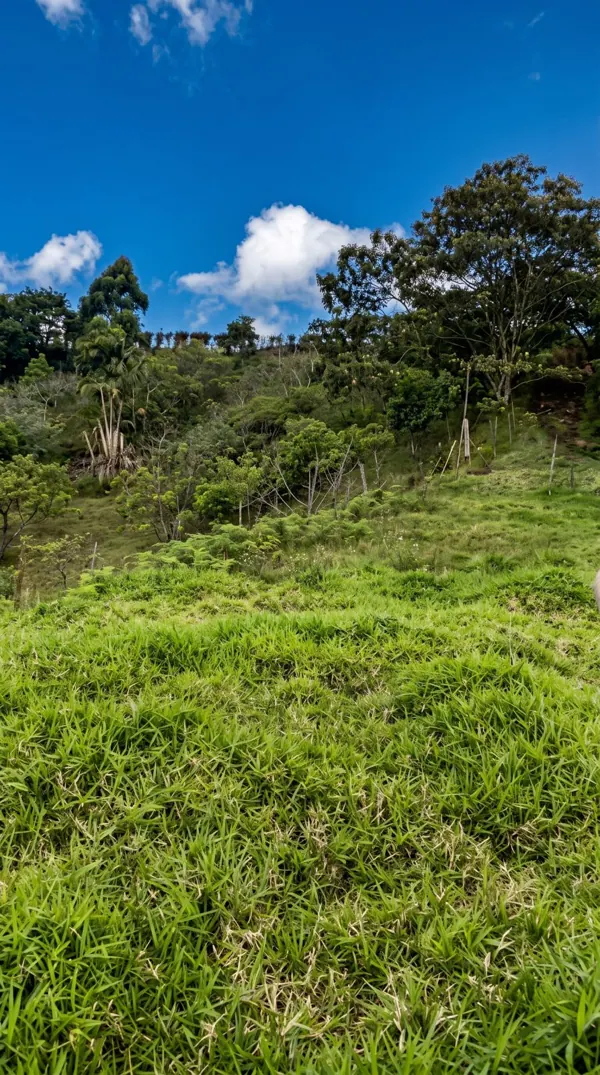 Subdividable land for sale in Rionegro, Antioquia · USD 425,000
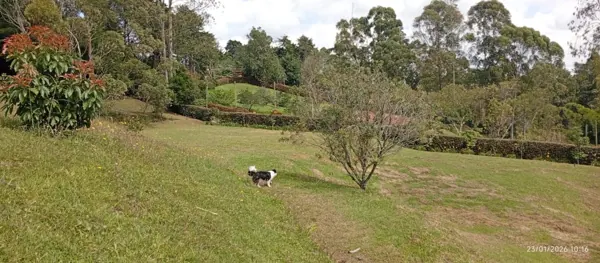 3,450 m² lot for sale in Marinilla, Antioquia · USD 160,000
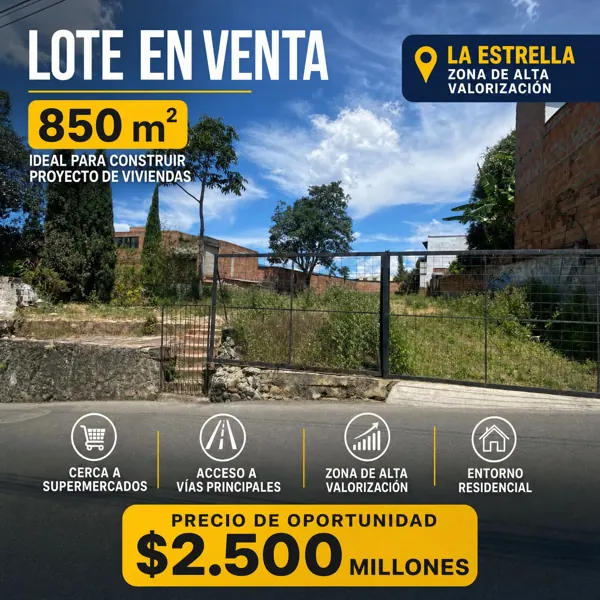 850 m² lot for sale in La Estrella, Antioquia · USD 790,000
Official sources consulted
- Superintendence of Notaries and Registry (SNR): certificate of title online (Spanish)
- GOV.CO: "Certificate of title of real estate" procedure (Spanish)
- Medellín City Hall: land-use concept lookup, MapGIS (Spanish)
- Medellín City Hall: manual for the zoning (POT) lookup in Mapas Medellín (Spanish, PDF)
- Ministry of Housing: what is a subdivision (parcelación) license? (Spanish)
- Ministry of Housing: who issues development, subdivision and building permits? (Spanish)
- DIAN: Ruling 11625 of 2025 on the withholding under article 398 of the Tax Code (Spanish)
Consulted on October 16, 2026. Sources are official Colombian documents in Spanish. This article is for information only and does not replace advice from a lawyer, an accountant or the competent authority. Rules and fees change: check the current version.
Other guides
- How to buy a farm in Antioquia, Colombia: steps and documents
- Investing in real estate in eastern Antioquia: Rionegro and Marinilla
- Farms in Huila, Colombia, for investment: what to check before buying
- How to find out the building potential of a lot in Medellín
- How to buy property in Colombia as a foreigner: 2026 guide