
Home › Blog › How to buy a farm in Antioquia, Colombia: steps and documents
How to buy a farm in Antioquia, Colombia: steps and documents
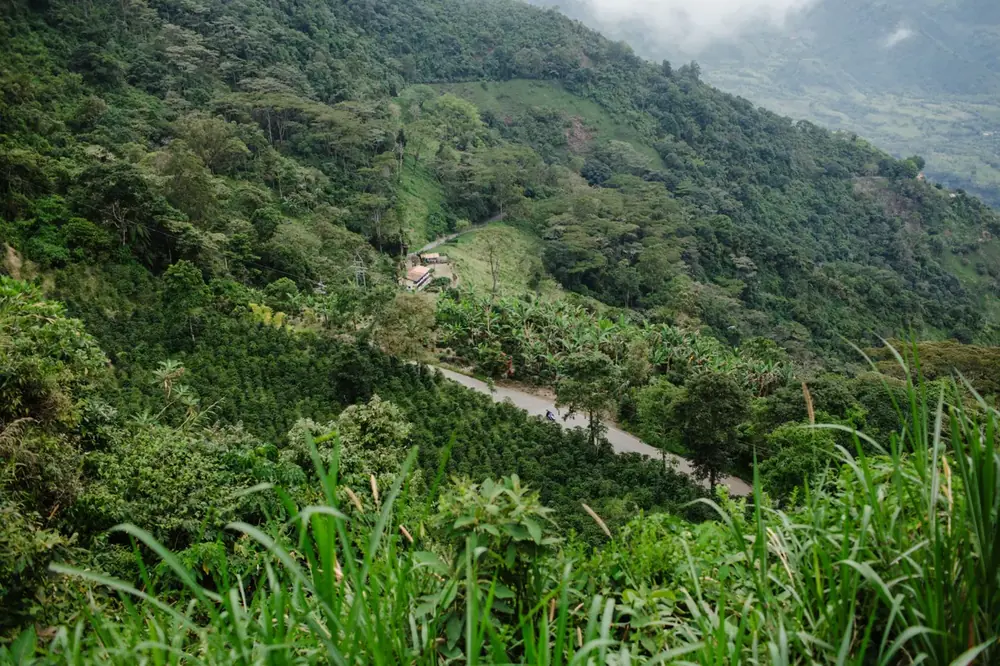
Mountains, coffee fields and a farm in Jericó, Antioquia (illustrative photo: Tiarra Sorte, Pexels)
Buying a farm is one of the biggest decisions a family or an investor makes. In Antioquia, the options range from weekend country homes near the Aburrá Valley (the Medellín area) to productive land in the west and east of the department. This guide sets out, in order, what to check and which documents to ask for so you can buy with peace of mind. It is for information only and does not replace advice from a Colombian lawyer or accountant.
1. Decide what the farm is for
Before looking at prices, be clear about the use: rest and recreation, crops or cattle, a tourism project, or an investment to subdivide later. The use defines what you need to check. A weekend farm calls for checking access, water and utilities; a productive farm also calls for checking soils, topography and suitability for the crop you have in mind.
For agricultural use there is a useful public tool: UPRA's SIPRA, which publishes land-suitability maps by crop and by department. They are general-scale maps: they help you get your bearings, but they do not replace a technical visit or a soil analysis of the property.
2. Ask for the certificate of title (certificado de tradición y libertad)
The certificado de tradición y libertad (CTL) is the document that shows the legal status of the property: who owns it, how they acquired it, and whether any mortgages, liens or other restrictions are recorded. It is issued by the Superintendence of Notaries and Registry (SNR) and can be obtained online with the registry office and the property registration number, the matrícula inmobiliaria (certificados.supernotariado.gov.co; see also the procedure page on GOV.CO).
Always ask for a recent one and review it yourself, not only the copy the seller gives you. The fee is set every year in the SNR's registry fee resolution (check the current one).
What to look for in the certificate
- That the seller is the registered owner (or has a power of attorney to sell).
- Active entries for mortgages, liens, lawsuits, easements or restrictions.
- That the area and boundaries match what you are shown on the ground.
- The origin of the property: if the chain of title includes an award of public land (baldíos), see step 4.
3. Have a title study done
The certificate shows the recorded entries, but a title study goes further back: it reviews the deeds and transactions of recent years to confirm that the chain of ownership is sound and that there are no unsettled estates or defective sales. It is done by a lawyer. For farms it is especially important, because informal inheritances, imprecise boundaries and differences between the deed area, the cadastral area and the real area are common.
If you find differences in area, do not ignore them: order a topographic survey and agree in writing on the area being negotiated.
4. Check whether the land comes from public land awards (Law 160 of 1994)
Much rural land in Colombia was once public land (baldíos) awarded to private individuals. Law 160 of 1994 (article 72) limits the purchase of such land: ownership of land awarded as baldíos cannot be consolidated above the size of the Family Agricultural Unit (UAF) for the area, and transactions that do so are void. So if the certificate or the title study shows an award, your lawyer must review this point before you sign.
5. Confirm the land use with the municipality
What you can do on a farm is defined by the municipality's land-use and zoning plan (Plan or Esquema de Ordenamiento Territorial). Ask the Planning Department (or the curaduría, if the municipality has one) for the land-use concept of the property. You will learn whether you can build an additional house, subdivide or set up a tourism project, or whether there are protected areas because of streams or slopes.
If you plan to divide the farm into lots, keep in mind that on rural land this requires a subdivision license, a licencia de parcelación (we explain it in what to check before buying land in Colombia).
6. Visit the land without rushing
No document replaces a visit. Check access in the rainy and the dry season, the condition of the road, and the water (springs, streams, a rural aqueduct), and whether there is a water concession if you need one for production. Ask about electricity, cell phone signal and the neighbors. Walk the boundaries with the seller and compare them with the deed.
7. Promise of sale, deed and registration
Once everything is clear, the deal is usually formalized in three steps:
- Promise of sale (promesa de compraventa): sets the price, the payment terms, the deed date and what happens if either party fails to perform.
- Public deed at a notary (escritura pública): signed by buyer and seller. The notary asks for, among other things, proof that the property tax (predial) is paid up.
- Registration: the deed is recorded at the corresponding Public Instruments Registry Office. Until it is registered, ownership has not passed to the buyer.
On taxes, when the seller is an individual and the property is a fixed asset, article 398 of the Tax Code sets a 1% withholding on the sale price, paid before the notary (DIAN ruling 11625 of 2025). For the seller, the gain on a property held for two years or more is treated as an occasional gain, taxed at 15% since Law 2277 of 2022 (DIAN doctrine). Always confirm current rates with your accountant.
Costs to plan for on top of the price
Add closing costs and the first months of ownership to your purchase budget. We do not give figures here, because they depend on the value and the municipality, but keep in mind:
- Notary: notary fees for the deed and copies.
- Registration: registration tax (set by the department) and registry fees at the registry office.
- Prior studies: title study, topographic survey and, if you will produce, soil or water analysis.
- Ownership: property tax, maintenance of fences and internal roads, a caretaker (mayordomo) and utilities.
Ask the notary and your lawyer for current amounts before signing the promise of sale, and state clearly in it who pays each cost.
Frequently asked questions
Can I buy a farm that has several owners?
Yes, but all registered owners must sell (or grant a power of attorney to do so). If only one of them sells you their share, you become a co-owner with the others.
What if the farm is part of an unsettled estate?
Until the estate is settled and registered, the heirs do not appear as individual owners. The prudent course is to wait for the process to finish, or to negotiate with clear conditions and legal advice.
Is the deed area always the real area?
Not always. That is why a topographic survey is advisable, and why the contract should state whether the price is for the property as a whole (cuerpo cierto) or by area.
How long does the process take?
It depends on the property's documents and the payment method. A property with clean title and taxes paid up is deeded faster than one with unsettled estates or differences in area.
Farms for sale in Antioquia with Vora Capital
At Vora Capital we help buyers purchase farms anywhere in Colombia: we review documents, visit the property with you and tell you what the regulations allow. Our current listings include a 32-hectare farm in Girardota, a country house with a pool in Girardota and a 21-hectare farm in Nutibará, Frontino.
Can we help with your purchase?
We review documents and zoning, and we go with you on the visit. The first consultation is free.
Write to us on WhatsAppRelated properties
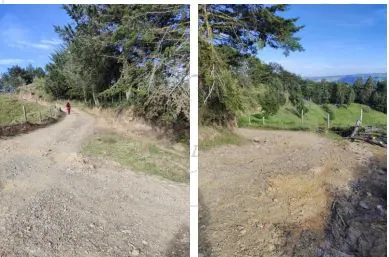 32-hectare farm for sale in Girardota, Antioquia · USD 820,000
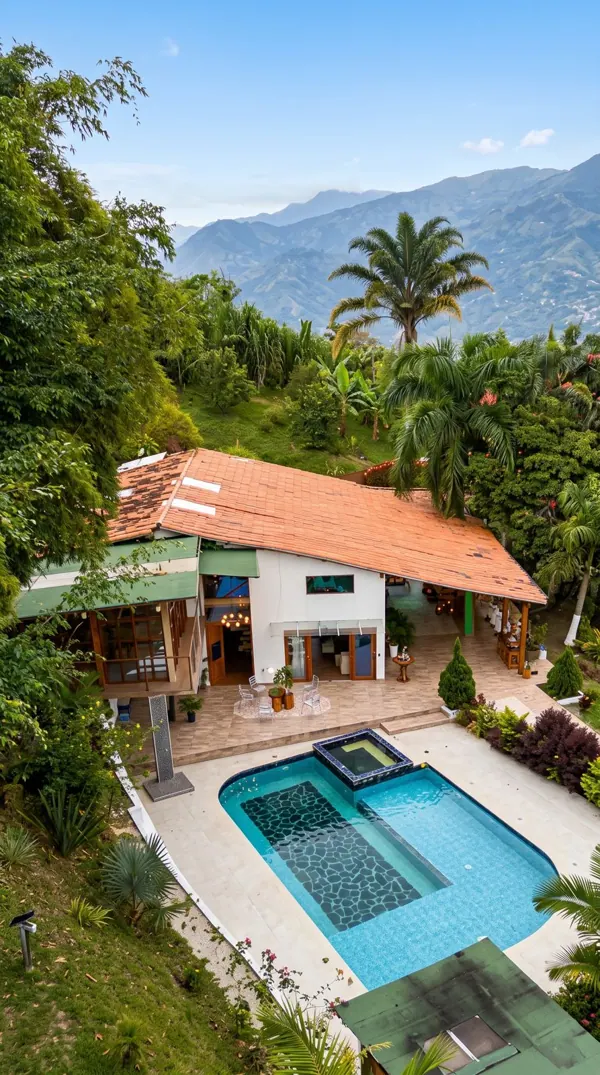 Country estate with pool for sale in Girardota · USD 660,000
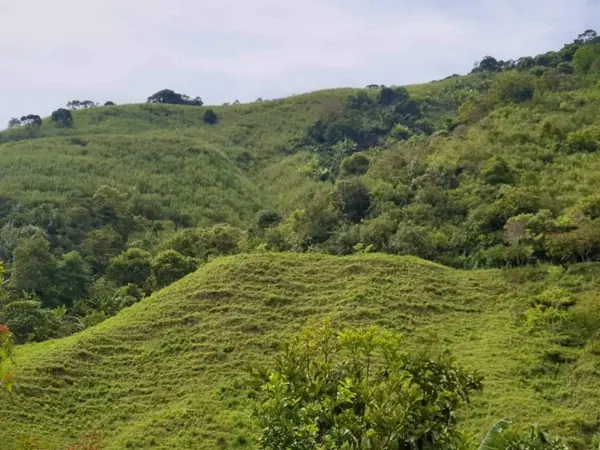 21-hectare coffee farm for sale in Frontino (Nutibará) · USD 123,000
Official sources consulted
- Superintendence of Notaries and Registry (SNR): certificate of title online (Spanish)
- GOV.CO: "Certificate of title of real estate" procedure (Spanish)
- SNR: procedures and current registry fees (Spanish)
- Ministry of Foreign Affairs (legal index): Law 160 of 1994 (Spanish)
- UPRA: SIPRA, rural agricultural planning information system (Spanish)
- DIAN: Ruling 11625 of 2025 on the withholding under article 398 of the Tax Code (Spanish)
- DIAN: official doctrine on Law 2277 of 2022 (Spanish, PDF)
Consulted on October 16, 2026. Sources are official Colombian documents in Spanish. This article is for information only and does not replace advice from a lawyer, an accountant or the competent authority. Rules and fees change: check the current version.
Other guides
- What to check before buying land in Colombia: zoning, land use and title
- Investing in real estate in eastern Antioquia: Rionegro and Marinilla
- Farms in Huila, Colombia, for investment: what to check before buying
- How to find out the building potential of a lot in Medellín
- How to buy property in Colombia as a foreigner: 2026 guide